
For parents of preemies, parents of highly sensitive children, and anyone grieving the version of parenthood they’d pictured — this is the story of my daughter’s 18 days in the NICU, and what those days taught me about letting go, accepting support, and trusting the path your child is actually on.
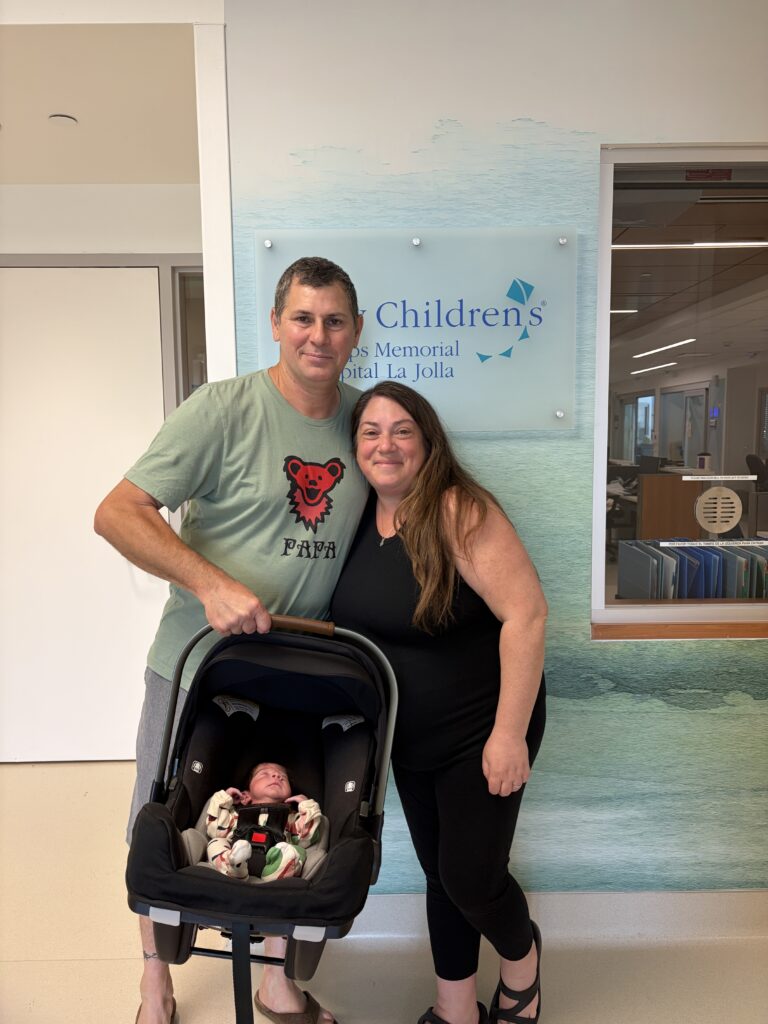
Eighteen days. That’s how long my daughter Poppy spent in the NICU at Scripps La Jolla after arriving six weeks earlier than planned.
If you’d asked me on the morning of my scheduled C-section, before any of this happened, I would have told you a NICU stay sounded like a nightmare. Machines. Wires. A baby I couldn’t hold whenever I wanted. Weeks of uncertainty stretched out ahead of me.
I could not have told you, at the time, that those 18 days would become one of the most formative experiences of my life. A gift, just wrapped in paper I never would have chosen.
As a coach who works with highly sensitive families, I spend my days helping parents let go of the timeline they thought they were promised and trust the path their child is actually on. I did not expect my own daughter to hand me the most personal masterclass I’ve ever received on that exact lesson, three weeks before I was supposed to meet her.
Here’s what I learned.

The Fear Comes From the Story We Tell Ourselves
As I was being prepped for an emergency C-section, the head Nurse Practitioner of the NICU came in to talk with me. She explained that Poppy would be going straight there once she was born. I panicked. My mind went immediately to something is wrong with my baby.
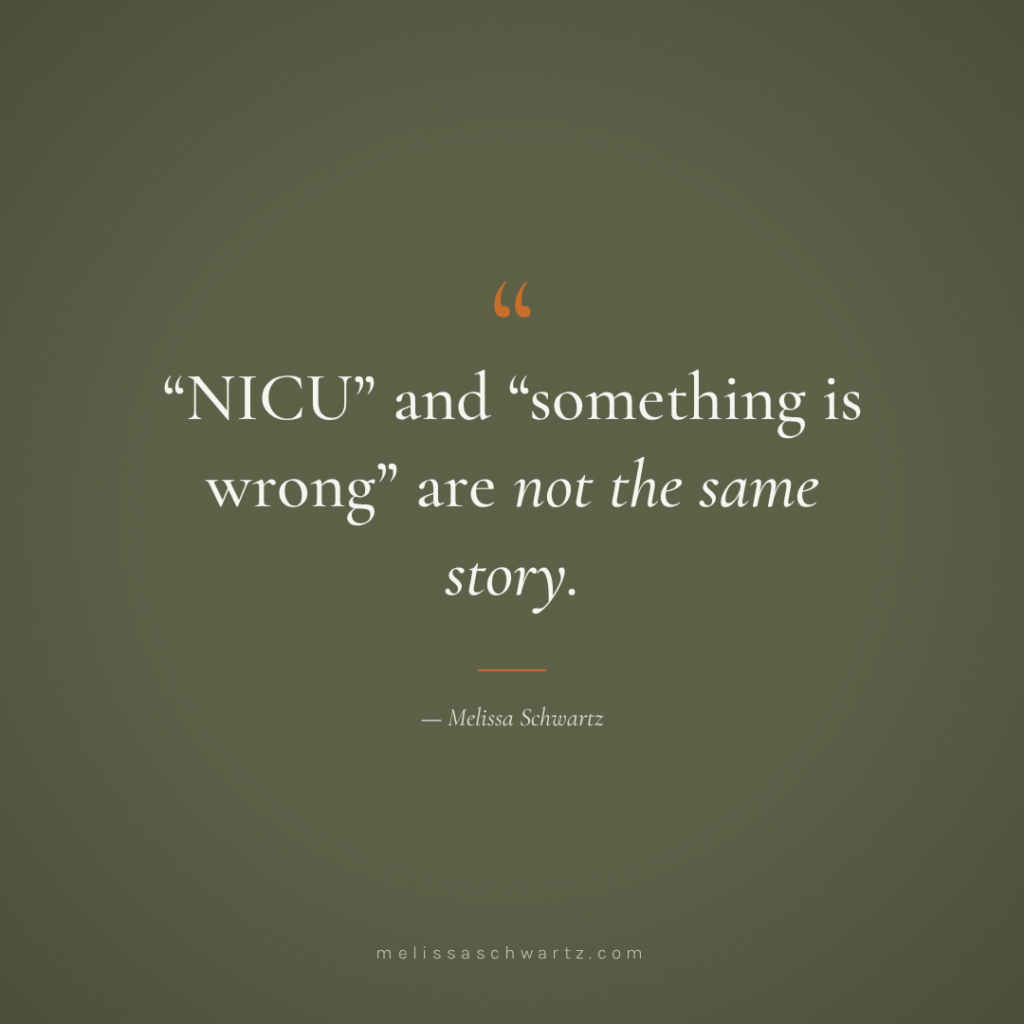
What I hadn’t understood yet was that “NICU” and “something is wrong” are not the same story. Poppy wasn’t sick. She simply hadn’t finished cooking. She needed more time to do outside the womb what she would have otherwise done inside it.
That distinction changed everything about how I was able to show up for the next 18 days. It’s a distinction I now watch play out constantly in my coaching work. So often, the fear we feel about our child’s struggle, whether it’s a developmental delay, a meltdown, a sensory need, a slow start, is bigger than the actual situation. We fill in the blanks with worst-case stories before we even know what we’re dealing with. Learning to separate what’s actually happening from the fear narrative we’ve built around it is one of the first and most important shifts I help parents make.
The Moment I Had to Let Go of the Picture in My Head
I had pictured a golden hour. Skin to skin, soft light, that cinematic first moment every birth class prepares you for.
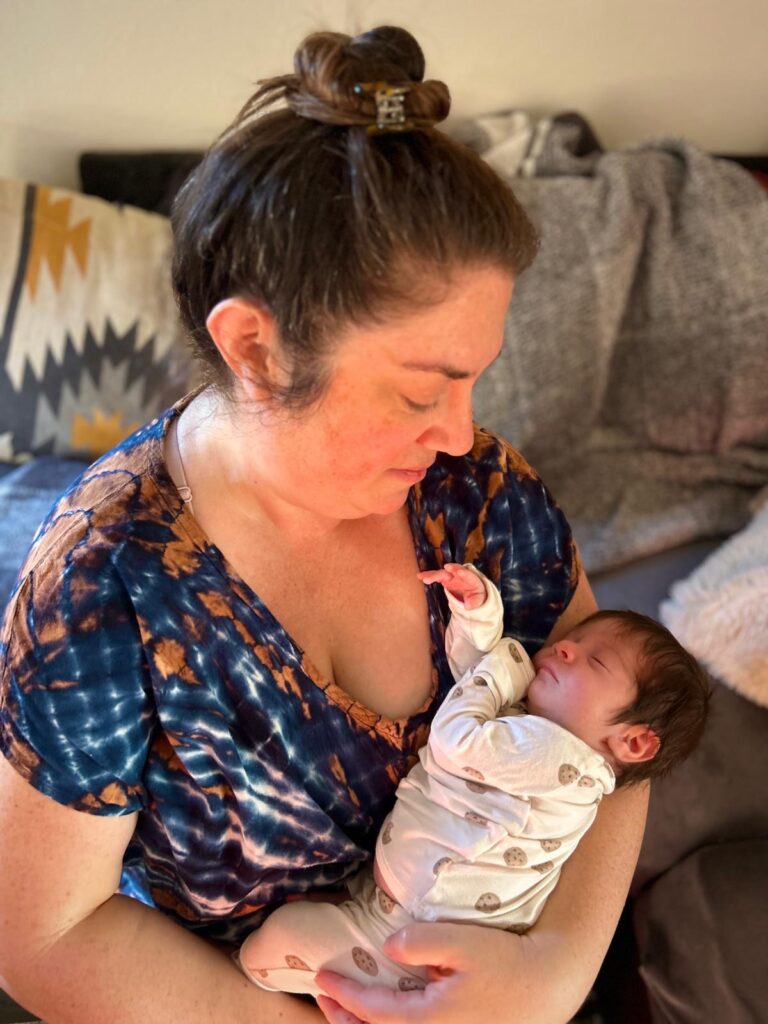
Instead, the first time I held my daughter, a nurse carefully lifted her out of an incubator, feeding tube and all, and placed her in my arms. She was so small. Nothing about it looked like what I’d imagined.
And somehow, it was still magical.
I think about this a lot now when I work with parents who are grieving the childhood or the child they thought they’d have. The picture in our head, the one built from our own upbringing, from social media, from what we assumed parenting would feel like, rarely matches the reality in front of us. The work isn’t forcing reality to match the picture. It’s learning to find the magic in what’s actually here.
Letting Go of Control Was the Gift, Not the Loss
For the first stretch of Poppy’s life, I could not care for her around the clock. I was healing from an emergency C-section, and some of the most skilled, compassionate NICU nurses in the country were caring for her instead. They taught me how to care for a preemie, which is its own language, distinct from caring for a full-term newborn. My husband learned right alongside me. Watching him step in so completely, with Poppy and with everything at home, is a big part of why I’ve felt ready to ease back into work sooner than I expected.
I didn’t choose this arrangement. If you’d given me the option, I would have insisted on doing it all myself, immediately, the way I’d planned. But not having a choice turned out to be exactly what I needed. I got to heal. I got to learn. I got support I never would have asked for on my own.
This is a pattern I see constantly in the families I work with, especially the ones raising highly sensitive children. The parents who struggle most are often the ones who believe they have to do it all, hold it all, fix it all, alone. Learning to let go of that control, to let other people in, to trust that support doesn’t make you a lesser parent, is often the exact shift that allows real healing to happen. Not just for the child. For the parent too.
Structure Can Come From Unexpected Places
Every three hours in the NICU, Poppy had what the nurses called her “cares,” a diaper change, a temperature check, a feeding. As the days went on, I got on her schedule. By the time we brought her home, at 18 days old, she was already sleeping and eating on a predictable rhythm. Most parents don’t get that until months in, if ever.
There’s something worth noticing here beyond the practical convenience. The structure that gave Poppy her rhythm wasn’t something I built. It came from an environment I didn’t choose and couldn’t control. And it worked better than anything I could have engineered on my own.
Parents often come to me wanting a system, a script, a plan that will finally make things click into place. What I’ve learned, both from my own childhood as a highly sensitive kid and from years of coaching, is that the most lasting structure usually comes from consistency and attunement, not control. From showing up the same way, over and over, and trusting the rhythm to emerge rather than forcing it into place.
Even the Hardest Days Carry Something Forward
The hardest day of the entire experience was the day I had to leave the hospital without her. Despite being able to visit every single day, driving home without my daughter in the car was one of the most painful things I’ve ever done. I cried the whole way. Her nurse told me to call the moment I got home just to hear that she was okay. She was, of course.
I didn’t know it then, but that heartbreak was teaching me something I would need later. Today, I can leave Poppy at home with my husband or my mother without unraveling. That ease, that trust that she is safe even when I’m not the one holding her, was forged in a parking garage on one of the worst days of my life.
I share this because I think we sometimes rush past the hard parts on the way to the silver lining, as if the pain has to be minimized for the gift to count. It doesn’t. The hard day and the gift can both be true at the same time. That’s not a consolation prize. That’s just what growth tends to look like.
The Environment We Didn’t Choose Became a Strength
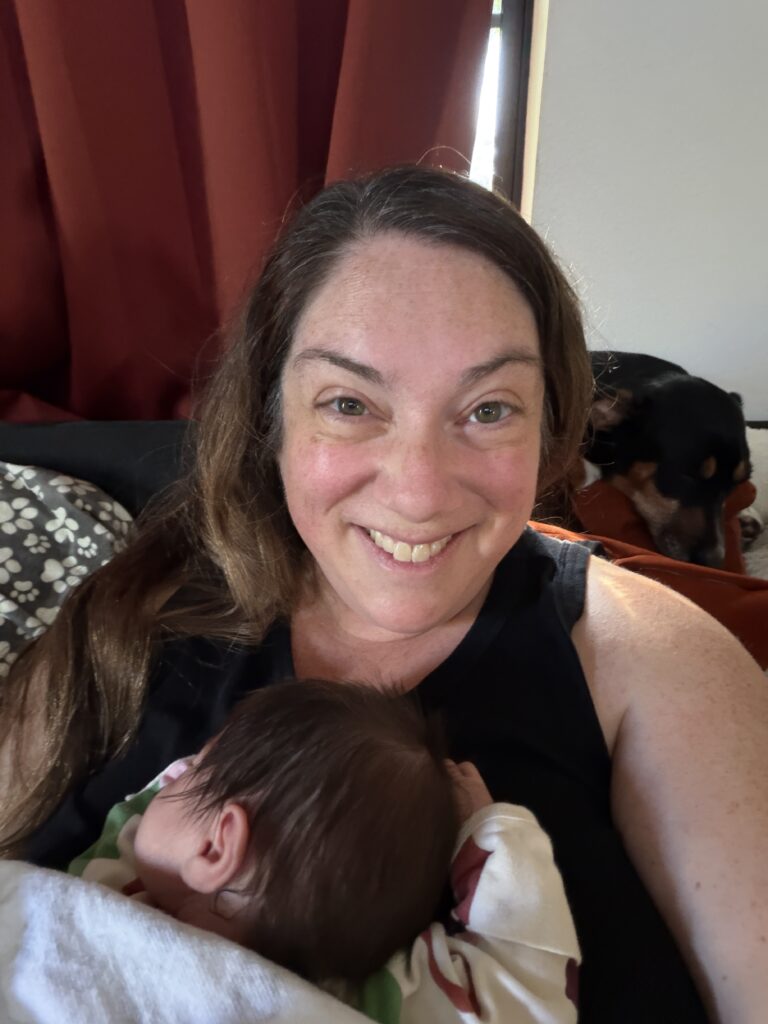
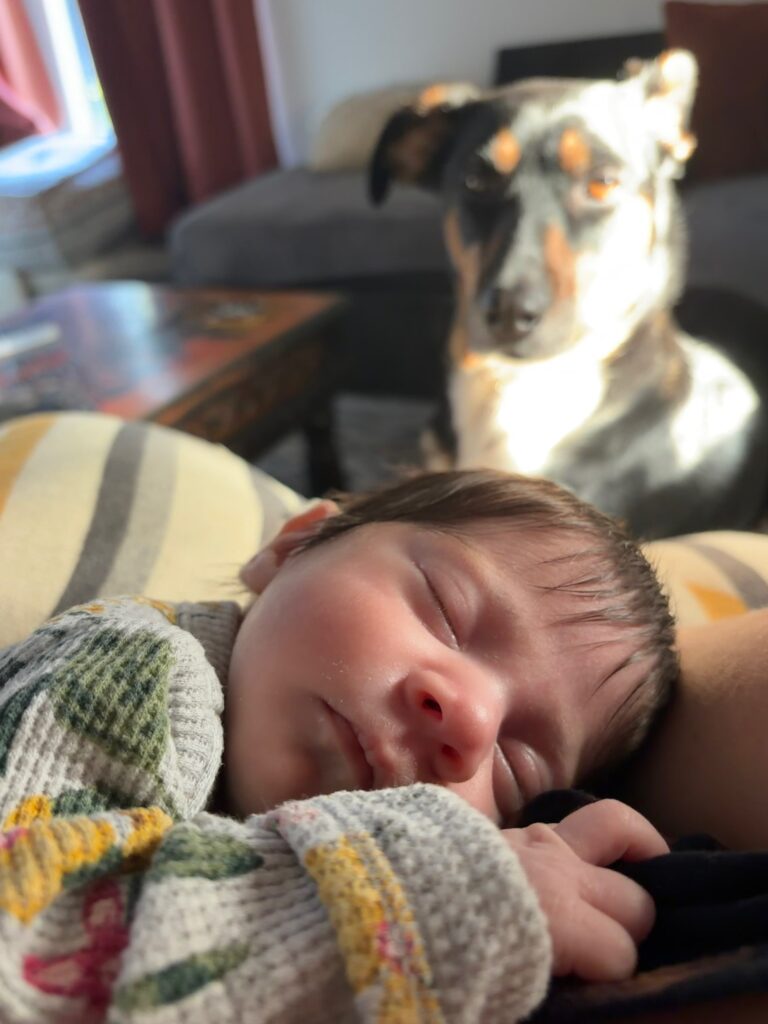
The NICU, full of beeping monitors, hallway chatter, and overhead announcements, was not the calm, quiet space I would have chosen for my daughter’s first weeks of life. And yet, now that we’re home, our dog barks at everything, delivery trucks, birds, neighbors walking by, and Poppy doesn’t even flinch. All that early noise seems to have built a kind of resilience I never would have thought to create on purpose.
I think about this often in my work with highly sensitive children specifically. We tend to assume the goal is to protect our sensitive kids from every hard or overstimulating experience. But some of the environments we’d never choose end up building capacities we couldn’t have built any other way. The goal isn’t a life free of difficulty. It’s the right kind of difficulty, held with enough support, at the right time.
What I Didn’t See Coming
None of this was on my radar the day they wheeled me into the OR and told me my daughter would need the NICU. I couldn’t have predicted any of it: the trust that would come from letting go, the sleep, the rhythm, the resilience, the version of surrender I didn’t know I still needed to learn.
I definitely wasn’t ready to believe that 18 days in the NICU would end up being one of the greatest gifts of my life. But that’s exactly what it turned out to be.
This is the work I get to do with families every single day: helping parents let go of the timeline they thought they were promised, trust the path their child is actually on, and learn that the detour is so often the growth itself, not just an obstacle standing in front of it.
Turns out my own daughter is already making me a better coach.
You Don’t Have to Figure This Out Alone
If this resonates and you’re navigating your own version of letting go, whether that’s an unexpected start to parenthood, a highly sensitive child who doesn’t fit the mold you’d imagined, or your own childhood patterns showing up in how you parent today, I’d love to talk. Reach out here to learn more about working together, or start with a free 20-minute discovery call.
Questions Parents Ask About the NICU
No. Many babies are in the NICU simply because they arrived early and need more time to grow, feed, and regulate outside the womb. “NICU” and “something is wrong” are not the same story. Understanding that distinction can transform how parents experience a NICU stay, replacing panic with presence.
Support NICU parents by showing up practically and without judgment: deliver meals, handle errands, care for older siblings or pets, and check in without demanding updates. Let them feel their grief and fear without rushing them toward silver linings. The hard days and the gifts can both be true at once.
It can. Many NICU parents come home with a baby already on a predictable feeding and sleep rhythm, hands-on training from expert nurses, and a hard-won ability to accept help and trust others with their child. The pain is real, and so is the growth that can come with it.
Meet Melissa

Melissa Schwartz is a parenting coach and sensitivity expert, co-founder of Leading Edge Parenting, and co-author of Authentic Parenting Power and Rico the Race Car: Rico’s Bumpy Week. A three-time host of The Shift Network’s Sensitives, Intuitives and Empaths Summit, she has supported parents of highly sensitive children internationally through one-on-one coaching, group programs, and courses. She lives in Southern California with her husband, her daughter Poppy, and one very vocal dog.